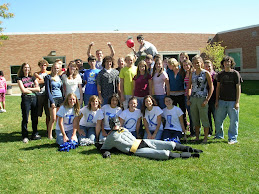
After all of the conversations and presentations on Arcadia, I'm boiling it down to one simple question that we would like ALL TOK students to comment on...
What is Arcadia saying about knowledge in general?
Discuss...
Wednesday, October 15, 2008

Sunday, October 12, 2008
Affirmative Action
So this post is a result of the ethics activities we've been doing in class. The issue my group had was 'Should colleges or universities be held accountable for creating a ethnic and racially diverse community?' A further question I have is affirmative action (an action/policy that favors those who tend to suffer from discrimination esp. in employment or education) a good or bad thing? I thought I knew, but then I started playing devil's advocate in class, and then I wasn't sure.
One reason this question is particularly interesting to me is that I'm filling out college apps right now and I always avoid the ethnicity question or don't fill it out if I can. I'm not sure why I do that, maybe it's because I would prefer that a university look solely at my grades and test scores rather than more personal factors.
What do you guys think?
Friday, October 03, 2008
Caption Contest

Using your TOK skills and language, write a caption to this photo (of a masked TOK Seminar student) and win a prize.
What can we know about this through:
sense perception
sense perception
reason
emotion
language?
What knowlege issues are present?
Keep your captions appropriate, please!
Deadline, Friday, Oct. 10!
Wednesday, September 24, 2008
Belief vs. truth
A simple question: What is the relationship between belief and reality? Here's my theory:
In what way do we know the world? We experience it through our senses, but how can we know what is real and what is not? If one is not aware of the existence of some thing, the thing is not real to the observer because it is not perceived as real. There is no true knowledge that we can know, but we can create knowledge through belief formulated through observation and the other ways of knowing we have discussed, because it is the closest thing we have to the truth. What we believe as real or perceive as real becomes real simply by the act of perceiving it so.
Existence is a web of infinite dimensions in which everything is linked to everything else through the threads, which are cause-effect relationships between events; the web encompasses all space, time, matter, energy - it is everything and is always expanding as time goes forward. Paradoxically, because it is not possible for something not to exist, the blanket is infinite. It is not one-, two-, three-, four-dimensional. It includes and composes everything, in an infinite number of dimensions.
If one part of the web is changed, an infinite number of new threads spring from the changed point. The resulting threads originating from the centre [theoretically the beginning of space, time &cetera] form the web as it grows to fill the future, a process which continually alters the future as the past changes.
Though the web encompasses everything, that is not to say that it is absolute. The present [which is infinitely small because it is simply the point at which the past and the future meet] and the past exist only in perception and memory. We can perceive that there is a present, but it is impossible to define a time as the present because we can only measure it relative to the past and future. In fact, the present is perception, while what we frequently refer to as the present is often the near past or near future. The past, on the other hand, can be altered because it does exist in the web but is stored in memory that is constantly being filtered through perception, making it extremely dynamic and removing the physical limitations that, along with perception of the past, govern the future.
Since the past exists only though perception thereof, because the future does not yet exist, and because the physical world only governs the future, perception is all that is real and therefore every being has a different reality.
It is also possible to delete from or to add to the past by adding or removing events or series of events from the blanket. When an event or series of events is removed, the causes of that event or series run straight through to the effects and the event no longer exists; it never existed, in the perception of whoever removed it. When an event is added, it attaches to effects and causes, forming a new portion of the web. This manipulation of the past can be achieved through either conscious or unconscious change in perception, and when the past changes, conscious choices and in turn the future will change.
George Orwell adequately described this idea of intentional manipulation of perception to exercise control over the past and through cause and effect the future in 1984 with the concept of doublethink and the Party’s slogan that 'whoever controls the past controls the future'.
The future is governed jointly by the physical world and by the collective of individual perceptions of the past and present, making it impossible to predict due to the extremely dynamic nature of perception.
Due to this relationship between perception and reality, life only has a meaning if there is a perceived meaning. Once a meaning has been perceived, that meaning holds true within one's own reality. Life is what you make of it.
If you hear me say "In your perception", it means that whatever you've said is simply your perception, and isn't the only reality. So I guess what I mean to say is "I reject your reality, and substitute my own."
Discuss/debate.
In what way do we know the world? We experience it through our senses, but how can we know what is real and what is not? If one is not aware of the existence of some thing, the thing is not real to the observer because it is not perceived as real. There is no true knowledge that we can know, but we can create knowledge through belief formulated through observation and the other ways of knowing we have discussed, because it is the closest thing we have to the truth. What we believe as real or perceive as real becomes real simply by the act of perceiving it so.
Existence is a web of infinite dimensions in which everything is linked to everything else through the threads, which are cause-effect relationships between events; the web encompasses all space, time, matter, energy - it is everything and is always expanding as time goes forward. Paradoxically, because it is not possible for something not to exist, the blanket is infinite. It is not one-, two-, three-, four-dimensional. It includes and composes everything, in an infinite number of dimensions.
If one part of the web is changed, an infinite number of new threads spring from the changed point. The resulting threads originating from the centre [theoretically the beginning of space, time &cetera] form the web as it grows to fill the future, a process which continually alters the future as the past changes.
Though the web encompasses everything, that is not to say that it is absolute. The present [which is infinitely small because it is simply the point at which the past and the future meet] and the past exist only in perception and memory. We can perceive that there is a present, but it is impossible to define a time as the present because we can only measure it relative to the past and future. In fact, the present is perception, while what we frequently refer to as the present is often the near past or near future. The past, on the other hand, can be altered because it does exist in the web but is stored in memory that is constantly being filtered through perception, making it extremely dynamic and removing the physical limitations that, along with perception of the past, govern the future.
Since the past exists only though perception thereof, because the future does not yet exist, and because the physical world only governs the future, perception is all that is real and therefore every being has a different reality.
It is also possible to delete from or to add to the past by adding or removing events or series of events from the blanket. When an event or series of events is removed, the causes of that event or series run straight through to the effects and the event no longer exists; it never existed, in the perception of whoever removed it. When an event is added, it attaches to effects and causes, forming a new portion of the web. This manipulation of the past can be achieved through either conscious or unconscious change in perception, and when the past changes, conscious choices and in turn the future will change.
George Orwell adequately described this idea of intentional manipulation of perception to exercise control over the past and through cause and effect the future in 1984 with the concept of doublethink and the Party’s slogan that 'whoever controls the past controls the future'.
The future is governed jointly by the physical world and by the collective of individual perceptions of the past and present, making it impossible to predict due to the extremely dynamic nature of perception.
Due to this relationship between perception and reality, life only has a meaning if there is a perceived meaning. Once a meaning has been perceived, that meaning holds true within one's own reality. Life is what you make of it.
If you hear me say "In your perception", it means that whatever you've said is simply your perception, and isn't the only reality. So I guess what I mean to say is "I reject your reality, and substitute my own."
Discuss/debate.
Monday, September 22, 2008
Something to think about
Hey guys!
I'm sure some of you have seen this video before... but its just something that got me thinking.
We've all seen and heard these statistics before, but this video puts them into a much smaller context, and uses some pretty emotional images and music to get the point across.
Just thought I'd throw it out there!
Let me know what you think!
I'm sure some of you have seen this video before... but its just something that got me thinking.
We've all seen and heard these statistics before, but this video puts them into a much smaller context, and uses some pretty emotional images and music to get the point across.
Just thought I'd throw it out there!
Let me know what you think!
Sunday, September 21, 2008
God Bless George W Bush
So if y'all haven't noticed, the majority of Poudre is way liberal, and i think its about time i post some of my beliefs (that differ vastly) and see what y'all say. I found a youtube video that pretty much sums it up, so have at it. xoxo sarah t xox
oh and some things that the vid didn't say
after 9/11 when surveyed (by NY Times) well over 50% of people supported invading iraq
saddam had used weapons of mass destruction on his people before and didn't let the UN investigate his labs, despite his agreement to do so
he's human, and i hardly ever hear anyone speak with proper grammer...ever. so don't go saying he's stupid because he cant speak correctly.
its fascinating to me that as americans, we love to rewrite our history :~)
Wednesday, September 17, 2008
Thursday, September 11, 2008
Dear Mr. Obama
Talking about Community of Knowers, here is this guy who was a soldier in the Iraq war. This is what he has to say.
Sunday, September 07, 2008
Aliens!!!
Alright folks, it's time to bring up the inevitable... do aliens exist? what are you're justifications, and lets all try to use out those truth tests. Now there is a lot of evidence on both sides saying yes or no, a simple visit to youtube will give you all the info you need to make an educated guess.
Now as for me, I guess I fell that there has to be something else out there with some intelligence. It would be unlikely for there not to be. How could it be that in the BILLIONS and billions of planets in the universe that our planet was the only one to sustain life, it just dosen't work.
Now as for me, I guess I fell that there has to be something else out there with some intelligence. It would be unlikely for there not to be. How could it be that in the BILLIONS and billions of planets in the universe that our planet was the only one to sustain life, it just dosen't work.
Thursday, August 28, 2008
"Allegory of the Cave" Question #1
What is something that you now believe to be true that you had a difficult time accepting? Why did you have a hard time believing it in the first place? What justifications were used that helped you turn the corner? And now that you accept it, how would you properly justify it to someone else? Please use ToK language and develop your answers.
"Allegory of the Cave" Question #2
When considering "Allegory of the Cave," how is it possible that some people can beilieve in illusion and accept it as reality? Give examples.
"Allegory of the Cave" Question #3
What is an example of "knowledge" that you have struggled accepting in any of your academic courses? Why has it been difficult? What is it about YOU that possibly has influenced this?
Please discuss subject matter, not individual teachers or teaching styles.
Please discuss subject matter, not individual teachers or teaching styles.
Wednesday, August 27, 2008
René Descartes
Ok guys, here's a question I've wanted to ask for a LONG time. The famous quote
"Cogito, ergo sum"- "I think, therefore I am"
or the alternate quote
"Dubito, ergo cogito, ergo sum"-"I doubt, therefore I think, therefore I am"
So is this true. I think this topic came up in our lunch class today, are we all really in some sort of generated universe, is everything just one REALLY long dream? What exists? can a table exist, if it dosen't think?
"Cogito, ergo sum"- "I think, therefore I am"
or the alternate quote
"Dubito, ergo cogito, ergo sum"-"I doubt, therefore I think, therefore I am"
So is this true. I think this topic came up in our lunch class today, are we all really in some sort of generated universe, is everything just one REALLY long dream? What exists? can a table exist, if it dosen't think?
For all my fellow bookworms...
So, as you all know we've been working with Plato's "Allegory of the Cave", trying to understand how it relates to knowledge and our search for truth.
This conversation brought to mind a book that I'd read that some of you may be interested in. The book is called Till We Have Faces and is a retelling of the myth of Psyche and Cupid by C.S. Lewis. Besides being a fascinating story it also contains some parallels with Plato's ''Allegory" regarding the way in which humans deal with being shown truth and the discomfort that sometimes accompanies acquisition of knowledge. I think the themes presented would lend themselves very well to a ToK discussion and fit in with what we've been learning about.
I've attached a link explaining some of the key themes/concepts of the book to the title of the post, the ones that would be most applicable are towards the bottom of the webpage. If you have time (I know it's a laughable concept in most of our lives...) please read it!
Let me know what you think...
This conversation brought to mind a book that I'd read that some of you may be interested in. The book is called Till We Have Faces and is a retelling of the myth of Psyche and Cupid by C.S. Lewis. Besides being a fascinating story it also contains some parallels with Plato's ''Allegory" regarding the way in which humans deal with being shown truth and the discomfort that sometimes accompanies acquisition of knowledge. I think the themes presented would lend themselves very well to a ToK discussion and fit in with what we've been learning about.
I've attached a link explaining some of the key themes/concepts of the book to the title of the post, the ones that would be most applicable are towards the bottom of the webpage. If you have time (I know it's a laughable concept in most of our lives...) please read it!
Let me know what you think...
Monday, August 25, 2008
Does God Exist?
I'm posting this in hopes of finding all the proper justification for one of the biggest questions, in my mind, that exists. I do ask that people don't argue and also respect eachothers opinions.
My goal for this post if for everyone to put everything on the table. Why they believe or even know God exists or why they believe or even know God doesn't exist. The "What do you believe" topic was a bit to broad for me and so I'm asking my fellow Theory of Knowledgians a more specific question that hopefully will raise many more.
I will start by saying that I do believe in a God. Perhaps not "The God" as described in the bible but rather a greater entity that created the universe. My reasons for this belief are faith, as I have always felt in a near impossible to describe way that there was something that I couldn't fathom that had to have created the very smallest fabric of space and time that makes up my eyes, ears, hair, pajamas, and keyboard that I type on, and that, while I believe evolution and even string theory, that there logically had to be something that created the strings.
Please respond to this post as I'm very agnostic and very unsure of many of my beliefs regarding religion and God. I'm not asking for someone to preach to me, I'm just curious what other's beliefs are and why they believe that way.
Also please be respectful in your comments as this is a delicate subject.
My goal for this post if for everyone to put everything on the table. Why they believe or even know God exists or why they believe or even know God doesn't exist. The "What do you believe" topic was a bit to broad for me and so I'm asking my fellow Theory of Knowledgians a more specific question that hopefully will raise many more.
I will start by saying that I do believe in a God. Perhaps not "The God" as described in the bible but rather a greater entity that created the universe. My reasons for this belief are faith, as I have always felt in a near impossible to describe way that there was something that I couldn't fathom that had to have created the very smallest fabric of space and time that makes up my eyes, ears, hair, pajamas, and keyboard that I type on, and that, while I believe evolution and even string theory, that there logically had to be something that created the strings.
Please respond to this post as I'm very agnostic and very unsure of many of my beliefs regarding religion and God. I'm not asking for someone to preach to me, I'm just curious what other's beliefs are and why they believe that way.
Also please be respectful in your comments as this is a delicate subject.
Thursday, August 21, 2008
Open Minds
So reading everyone's posts on the blog has been interesting, and I know we're talking a lot about knowledge and what we know and learning more stuff to know and all that. Something that comes up a lot, and comes up a lot in IB in general, is a concept of an open mind. I have a quote that I try to adhere to, and I'd like to share it, and see what people think.
"It is important to have an open mind, but not so open your brains fall out."
Is there such a thing as too open-minded? Too close-minded? What's the difference between being close-minded and standing by what you believe in? Draw the lines for me, guys....
Simone
Is the exclusion of developing countries from groups like G8 deterimental?
Many developing countries, which are in need of better economic support, are left out of major decisions and groups that could have very positive effects on their economy. They are left out because they do not have major production or consumption of products. Is this a fair or logical way for world economics to work?
Wednesday, August 20, 2008
Alrighty... lets fire up some discussion. IS freedom of choice really the right to hate?
OK... where to start?
Basically, i just went to youtube and typed the only thing i knew to - "Freedom of Speech is the Right to Hate", and clicked on the first video in the mix.
In short, it's a video response to an atheist concerning free speech.
In the video the man, (who, i thought really interstingly is MUSLIM) describes how even though people have "the right to engage in intellectual discourse, criticism and debate", they should still stay true to others' right to respect and dignity.
Wasn't that the main thing we talked about??
This creepy old man with a creepy little sign is protesting at an innocent young man's funeral, completely disrespecting the dead boy's parents and family. All for his own, creepy, old (yet still 'wise and authoritative') beliefs.
There's the other thing! He mentions authority later in his video description. Word for word:
"Who would win in a slandering fight between you and Rupert Murdoch? You both and the same 'freedoms' but he has more POWER than you (since he owns SKY channels and newspapers)."
Thats's it. Who determines whether this guy is just old and creepy, sick, and wrong for coming to this boy's funeral and undermining every last bit of importance he had in life, destroying the good memories of him with messages of hate, or whether he's an Authority, a vietnam war veteran who's seen more than any of us IB kids combined, who knows - and FEELS what's right for himself (and obviously others around him)? Who decides this?
Himself.
It's his belief.
It's his choice.
I guess we have to give it to him, right?
But no matter what is decided, someone else has to come in and throw in their two cents. The majority of the comments were hate messages, not only to the man himself, but also to Islam, Middle Eastern Countries, and people of color in general!! It disgusted me... i had to leave 3 comments politely telling some people off. Oh well.
I just thought that this man, known as youtuber mujtahid2006, summed up everything we talked about in the last 3 days perfectly. Check out the video so you can see waht im talking about, the hate comments, and how right this man is on everything we talked about.
Go, my fellow IB students...
Discuss.
-Ali
The PHS ToK web page
Greetings! Click on the title of this post to access the PHS ToK web page. This page will provide you with all kinds of information, including links to the ToK assignment calendar, assessment documents and rubrics, seminar information and other nifty stuff. You will want to bookmark the calendar page and check it often since journal topics, due dates and handouts for the class are posted here.
Enjoy!
Enjoy!
Tuesday, August 19, 2008
What do you believe now?
What is a belief that you hold dear and why? How do you justify this belief?
Feel free to challenge each others' justifications and discuss one another's beliefs.
Feel free to challenge each others' justifications and discuss one another's beliefs.
What did you believe?
What is something that you thought to be true but later learned was not? (go beyond Santa Claus... link it to an AOK or personal experience)
What did you notice about yourself?
What is one epiphany you had when writing your Knower Biography or since when considering what you know about personal and proper justifications?
Monday, August 04, 2008
A new year, A few big changes
Welcome back to TOK and Poudre High School... TOK is changing and the blog is doing the same. Joining us this year is the talented Mr. Knight, teaching 7th period. Rumored to be a teacher once upon a time, he's back to give his wisdom. And since he is old, he has lots of it. In addition, this year's blog discussions will include the new TOK Seminar Students. This will make the blog a much more dynamic and important communication tool used by the PHS Diploma Students. So please... post, comment, discuss. Help us get it started... See you soon.
Monday, May 26, 2008
The Usual Suspects
So I know both the TOK classes have watched or are in the middle of watching "The Usual Suspects". I've already seen it before and now that I'm watching it again I realize that some pieces of information that I took for being true turned out to be false. However, at the time I did not question the validity of the information.
In the movie, how do you know what you know and why do you accept it to be true?
Were there any points in the movie when you did question the validity of the information that was presented?
Please discuss but try not to give too much away for the people who haven't finished it yet. Thanks :)
In the movie, how do you know what you know and why do you accept it to be true?
Were there any points in the movie when you did question the validity of the information that was presented?
Please discuss but try not to give too much away for the people who haven't finished it yet. Thanks :)
Thursday, May 15, 2008
Again, freedom of choice is the right to hate
I found this a couple days ago and it reminded me of "Freedom of Choice is the Right to Hate".
What do you think of this?
-Its not necessary to watch the whole thing....yes it is from the tyra banks show-
What do you think of this?
-Its not necessary to watch the whole thing....yes it is from the tyra banks show-
Thursday, May 01, 2008
An Inconvenient Truth and WOKs
Al Gore's documentary An Inconvenient Truth is powerful in that it approaches the topic of global warming using all four ways of knowing. He appeals to sense perception by using graphs and charts, as well as graphical representations of the potential effects of global warming. He also incorporates humorous footage from The Simpsons, as well as his own personal connection to the issue to provoke an emotional response. He also defines his arguments in strictly logical terms, and uses empowering language to make people feel as though they can make a difference. What if a case was made against global warming using the same techniques?
Follow this link:
Daily Show Global Warming
and explore the justifications of this viewpoint from a TOK perspective.
Follow this link:
Daily Show Global Warming
and explore the justifications of this viewpoint from a TOK perspective.
Sunday, April 27, 2008
Presidential Race
Relating to the current focus in the media on the presidential race:
We’ve been hearing a lot in the news about the candidates, an important issue to be sure, as it will determine where our country will be headed in the next four years. But a trend has been emerging in the media coverage of this important race: the determined focus of coverage on “political gaffs” made by the candidates in their bid for nomination. For example, Hilary has been labeled a liar for saying she was “under sniper fire” in Bosnia. Obama has been called elitist by saying that people from Pennsylvania who were frustrated have been turning to “religion and guns”.
The most surprising thing about all this political hoopla is how many intelligent people I have heard justifying their positions on these candidates based upon these gaffs (versus the issues, as I expected).
So the question is: do these gaffs represent simple mistakes made during a stressful time by overtired candidates or are they signs of major character flaws? What WOKs do we use to justify our judgment of this? And how does the media coverage play into our perceptions of these gaffs (as it focuses on these versus the issues)?
We’ve been hearing a lot in the news about the candidates, an important issue to be sure, as it will determine where our country will be headed in the next four years. But a trend has been emerging in the media coverage of this important race: the determined focus of coverage on “political gaffs” made by the candidates in their bid for nomination. For example, Hilary has been labeled a liar for saying she was “under sniper fire” in Bosnia. Obama has been called elitist by saying that people from Pennsylvania who were frustrated have been turning to “religion and guns”.
The most surprising thing about all this political hoopla is how many intelligent people I have heard justifying their positions on these candidates based upon these gaffs (versus the issues, as I expected).
So the question is: do these gaffs represent simple mistakes made during a stressful time by overtired candidates or are they signs of major character flaws? What WOKs do we use to justify our judgment of this? And how does the media coverage play into our perceptions of these gaffs (as it focuses on these versus the issues)?
Monday, April 21, 2008
Community Service
Since all of us are in IB, there are definitely some points in the school year where we have had to do community service. In your opinion, do you feel that there is more need for service on a local, state, national, or global level? Justify your reasoning using WOKs and try to identify your own biases that might cause you to support one level over another.
Sunday, April 20, 2008
Everyone (Who Contributes) Gets a Cookie!
What’s your position on Eminent Domain? How would you define “Public Use”?
Remember: Anyone who contributes (With POK’s WOK’s etc.) to this post will get a cookie if they show up to the Eminent Domain IA presentation on May 14th.
Note: If you want more background information, or interesting stories, ask and I’ll post them to this thread.
Remember: Anyone who contributes (With POK’s WOK’s etc.) to this post will get a cookie if they show up to the Eminent Domain IA presentation on May 14th.
Note: If you want more background information, or interesting stories, ask and I’ll post them to this thread.
Wednesday, April 16, 2008
Ethics in Subliminal Messages?
To being with, we have had a bit of a dead spot in the blog, so I'll try to throw in a relatively controversial topic...
When my Norwegian relatives came over a few summers ago, my second cousin discussed subliminal messages. Since he was majoring in psycology, he talked on how most subliminal messages do not actually work, and it is actually better to just show a commercial about your given product.
However, this brings to light many ethical decisions.
Should subliminal messaging be allowed? Why or why not?
Try your best to use the POKs and WOKs for your justification
When my Norwegian relatives came over a few summers ago, my second cousin discussed subliminal messages. Since he was majoring in psycology, he talked on how most subliminal messages do not actually work, and it is actually better to just show a commercial about your given product.
However, this brings to light many ethical decisions.
Should subliminal messaging be allowed? Why or why not?
Try your best to use the POKs and WOKs for your justification
Monday, April 14, 2008
More Fiction
In class we came up with books that we felt we could know something from. I want to know if you've ever read a book of fiction that made you completely challenge something you knew before reading it. What ways of knowing were you using and what ways of knowing was the book using? What was the conclusion that you made after reading it? Oh, and just one more thing: do you think that the quality of the writing of a book can affect your ability to know from it?
Monday, April 07, 2008
Fiction
This week in TOK, we're looking at ways we can know through fiction by watching the movie "10 Things I Hate About You." Don't get me wrong, I like the movie, but what can we really say we know after watching it? Is it possible to know something through any type of fiction, or does knowing through fiction only come through certain works or genres? If so, what do you think those works or genres may be?
Discuss.
Discuss.
Sunday, April 06, 2008
An Echo
"An echo, while implying an enormity of a space, at the same time also defines it, limits it, and even temporarily inhabits it." -Mark Z. Danielewski
Reading this quote made me really think about ways of knowing outside of science. While an echo can be defined with sound waves and logical explanations, here is a definition that seems to be driven more by emotion and even sense perception. How can changing our usual ways of knowing help us gain a new perspective on something, such as the nature of an echo?
Reading this quote made me really think about ways of knowing outside of science. While an echo can be defined with sound waves and logical explanations, here is a definition that seems to be driven more by emotion and even sense perception. How can changing our usual ways of knowing help us gain a new perspective on something, such as the nature of an echo?
Wednesday, April 02, 2008
Culture.
How do you, personally, define American culture?
Is there a societal definition?
And how do we arrive at such a definition?
Is there a societal definition?
And how do we arrive at such a definition?
Monday, March 31, 2008
Olympic in China
This is an opinion article from the collegian, talking about how the olympics should not be hosted in Beijing.
Read this article, it is quiet entertaining.
Question: Do you agree with this article or not? Use the TOK terminology and understanding to support your claim.
(click on the topic title to read the article)
Read this article, it is quiet entertaining.
Question: Do you agree with this article or not? Use the TOK terminology and understanding to support your claim.
(click on the topic title to read the article)
Sunday, March 30, 2008
Universal Healthcare
So in the last week, one of the most interesting IA Presentations (in my opinion) was on universal healthcare in the United States. The group who presented were enthusiastic about their topic, and there wasn't much time for a full discussion. So, I figured it would be in order to continue the topic here. When speaking about the topic, it seems as if it is one that attracts fallacies more often than others. The ones I frequently note being "special pleading", "Two Wrongs Make a Right", and "Guilt By Association"- this last one applying to political figures and insurance companies. What are some of your thoughts on the issue?
Friday, March 14, 2008
Questions of chance or destiny...i guess
I'm an agnostic. I know this, and have been despite many peoples attempts to sway me one way or the other.
Recently however, there are some chances or coincidences..."luck" as many people say that are just so unlikely that I start to question that maybe there is a higher force looking out force us.
Any thoughts?
Recently however, there are some chances or coincidences..."luck" as many people say that are just so unlikely that I start to question that maybe there is a higher force looking out force us.
Any thoughts?
Friday, March 07, 2008
Universal Truth
Does universal truth exist? Or is truth based on the individual?
I'm sure we've all discussed this topic before, but now, as educated TOK students, I'm curious to know how everyone views this. With different truth tests and justifications, how do we know in which of these areas truth exists? Also, how have your opinions on this changed issue since taking TOK? Use examples!
I'm sure we've all discussed this topic before, but now, as educated TOK students, I'm curious to know how everyone views this. With different truth tests and justifications, how do we know in which of these areas truth exists? Also, how have your opinions on this changed issue since taking TOK? Use examples!
Wednesday, February 27, 2008
The Awakening
I was thinking about the movie we are watching in this class and it made me think about using inductive leaps to 'know' something. So my question is, are there any instances in which you used inductive leaps to know something like Dr. Sayer did in the movie? If so, did you later find out whether or not it was true based on legit ways of knowing?
Saturday, February 23, 2008
Creationism Has Been Proven
(Sorry to all of you viewing this as school because the videos won't work)
http://www.youtube.com/watch?v=9zwbhAXe5yk
http://www.youtube.com/watch?v=FZFG5PKw504
Based on the evidence given is this a PJTB? and if it is do you agree with it?
http://www.youtube.com/watch?v=9zwbhAXe5yk
http://www.youtube.com/watch?v=FZFG5PKw504
Based on the evidence given is this a PJTB? and if it is do you agree with it?
Friday, February 22, 2008
Documentary Film Partners and The Poughkeepsie Tapes
So, sometime this year (I believe) the Documentary Film Partners will be releasing tapings of a serial killer's stalkings and murders, known as The Poughkeepsie Tapes. It'll be the actual footage of how the he stalked and murdered his victims, shot by the killer himself. Click on the title for a link to the official page, where they have the trailer for the video.
This is the message given by the Documentary Film Partners:
"Documentary Film Partners is a new, independent filmmaking collective looking to develop and produce hard-hitting documentary programming with unflinching dedication to the facts.
The Collective, as we call it, is made up of both student and veteran filmmaking professionals who strive to teach and learn from one another while producing a style of filmmaking rare in today's festivals. This brand of collaboration is in the DNA of our company, and every film we develop and produce.
Our independent spirit drives us to tell stories that shock audiences out of their comfort-zones. This isn't your prime-time news magazine, expose fare, but rather a startling view of the world as it is. Sometimes, the world at its worst.
The DFP promise is to deliver audiences film experiences that change them forever. Films that awaken the mind, inspire the heart, and even anger the soul. No subject is off-limits, nothing is sacred. Documentary Film Partners is committed to this promise, and we believe it is our responsibility to produce films that achieve so much more than entertainment."
What's your reaction to this, based on a ToK standpoint?
Is releasing such material moral/ethical?
Is it a necessary part of knowledge?
What purpose does it actually serve?
(I don't care if you answer these questions; just comment in general...)
This is the message given by the Documentary Film Partners:
"Documentary Film Partners is a new, independent filmmaking collective looking to develop and produce hard-hitting documentary programming with unflinching dedication to the facts.
The Collective, as we call it, is made up of both student and veteran filmmaking professionals who strive to teach and learn from one another while producing a style of filmmaking rare in today's festivals. This brand of collaboration is in the DNA of our company, and every film we develop and produce.
Our independent spirit drives us to tell stories that shock audiences out of their comfort-zones. This isn't your prime-time news magazine, expose fare, but rather a startling view of the world as it is. Sometimes, the world at its worst.
The DFP promise is to deliver audiences film experiences that change them forever. Films that awaken the mind, inspire the heart, and even anger the soul. No subject is off-limits, nothing is sacred. Documentary Film Partners is committed to this promise, and we believe it is our responsibility to produce films that achieve so much more than entertainment."
What's your reaction to this, based on a ToK standpoint?
Is releasing such material moral/ethical?
Is it a necessary part of knowledge?
What purpose does it actually serve?
(I don't care if you answer these questions; just comment in general...)
Tuesday, February 19, 2008
Maybe its just one of those days...
We have already done this in class, but I was just thinking aobut it since I started crying after watching the Pedigree commercial (link)
Why do humans respond more emotionally when the animal dies (I am Legend, Volvo ads (the foreshadowing), etc.) than when humans die?*
*I know humans are technically animals. But I'm using the very generic separation term
Why do humans respond more emotionally when the animal dies (I am Legend, Volvo ads (the foreshadowing), etc.) than when humans die?*
*I know humans are technically animals. But I'm using the very generic separation term
Wednesday, February 13, 2008
Some thoughts on emotion and who we are
1) In class we discussed whether it was possible to know solely through emotion. We came to the conclusion that no, one cant because emotions are responses to sensory stimuli.
If this is so, how can we as mankind reconcile the fact that no two people experience certain stimuli (qualia) the same way? How can everyone agree as to exactly what a headache feels like, what colors are, or what being in love feels like?
2) Jung suggests "personalities are shaped by feelings and thoughts while sensations color the deetails and inutition interprets the currents".
Is this true? What exactly are personalities? Are they our personal interpretations of a person? Or their expression of themselves as they see? Or something else entirely?
If this is so, how can we as mankind reconcile the fact that no two people experience certain stimuli (qualia) the same way? How can everyone agree as to exactly what a headache feels like, what colors are, or what being in love feels like?
2) Jung suggests "personalities are shaped by feelings and thoughts while sensations color the deetails and inutition interprets the currents".
Is this true? What exactly are personalities? Are they our personal interpretations of a person? Or their expression of themselves as they see? Or something else entirely?
Love
So since it is the week of Valentines Day I figured that a love question would be appropriate. So using the WOKs explain how someone can know that they are in love. (5th hour discussed this in class in reference to the Love is a Fallacy article that we read, this can be a continuation of that discussion.) Also what role does the media play in people’s view of love?
Wednesday, February 06, 2008
The Giraffe Test
Check out the Link above...
Try "The Giraffe Test".
What does this say about you as a thinker/knower?
Try "The Giraffe Test".
What does this say about you as a thinker/knower?
Weblog Mania
So (contrary to popular belief) I was not slacking off today but at a business competition, FBLA. While my partner and I were competing, we overheard that our speaking prompt might be about whether or not it is ethical for employers to look at the myspace or facebook profiles of any current or future employees to determine their position in the workspace. It turns out that the other team was trying to trick us into thinking that was the prompt and it actually wasn't. But that's okay.
I thought the problem was much more interesting than the inappropriate-relationships-at-work problem we thought and I would like to pose it to you guys.
Do you think looking at these profiles should factor into the judgment of possible employees in determining their effectiveness? For example, a person that is portrayed as a very social and unfocused individual on a myspace page versus a person with the exact same resume but no online profile are weighed and the one without a myspace gets the job. Do you think this is fair?
We came up with the solution that in order to ensure equal opportunity, an applicant should be informed that all public records concerning him or her would be looked at, just like they are required to talk about past convictions on an application. This would allow the applicants to have more equal chances in applying.
Please use personal examples and logic to justify. For example, I know that at Poudre a while ago there was some sort of situation with a teacher or coach looking at myspace accounts.
I thought the problem was much more interesting than the inappropriate-relationships-at-work problem we thought and I would like to pose it to you guys.
Do you think looking at these profiles should factor into the judgment of possible employees in determining their effectiveness? For example, a person that is portrayed as a very social and unfocused individual on a myspace page versus a person with the exact same resume but no online profile are weighed and the one without a myspace gets the job. Do you think this is fair?
We came up with the solution that in order to ensure equal opportunity, an applicant should be informed that all public records concerning him or her would be looked at, just like they are required to talk about past convictions on an application. This would allow the applicants to have more equal chances in applying.
Please use personal examples and logic to justify. For example, I know that at Poudre a while ago there was some sort of situation with a teacher or coach looking at myspace accounts.
Monday, February 04, 2008
Getting Duped
I was reading one of my favorite magazines today-Scientific American Mind-and there was an article on fallacies in the media with special relation to politics. I thought it was very applicable to TOK right now. Click the link above to read the article.
What can you do to keep yourself from "Getting Duped" by the media?
If you have a complete understanding of fallacies does that mean that you will not be able to be swayed by the media?
-Graham P
Political affiliations
Yes, I know that many of you are getting sick of hearing about politics eventhough many of us will be able to vote in the upcoming election. For that, I'm sorry
However, I'm interested in how many of you know who you support and whether it's because you agree with their views or just their general image/message.
The link provided is a test that shows who you mostly likely align with as far as ideology; for how many of you does it match up? (I'm not sure how accurate it is...but it was the best I could find).
Now, why do some people defend a candidate just because they are of the same party? Has politics become so Democrat vs. Republican that many people cant see beyond the party and into what a cadidate stands for? How many people would vote for someone merely because they are in that party, without stopping to consider their view beyond that it "should fit because thats what the party always represents"?
However, I'm interested in how many of you know who you support and whether it's because you agree with their views or just their general image/message.
The link provided is a test that shows who you mostly likely align with as far as ideology; for how many of you does it match up? (I'm not sure how accurate it is...but it was the best I could find).
Now, why do some people defend a candidate just because they are of the same party? Has politics become so Democrat vs. Republican that many people cant see beyond the party and into what a cadidate stands for? How many people would vote for someone merely because they are in that party, without stopping to consider their view beyond that it "should fit because thats what the party always represents"?
Sunday, February 03, 2008
Fallacious Speakers
I recently got into a political debate amongst a group of people at school and I found that as we each defended our presidential candidate/political parties we started using more and more fallacies in our arguments, except you could tell how invalid we sounded which led to the end of our debate. What I am wondering is: What differentiates the fallacies used by professionals (ex: politician's speeches) and those used everyday (ex: my debate)? Is there a difference? Which one makes it easier to believe the fallacies as truth?
"Money is the root of all evil"
Sorry, it’ll be long. This is an excerpt from Atlas Shrugged by Ayn Rand, though I’m editing the middle out because otherwise it’d be longer and I really wanted the beginning and end.
“So you think that money is the root of all evil? Have you ever asked what is the root of money? Money is a tool of exchange, which can’t exist unless there are goods produced and men able to produce them. Money is the material shape of the principle that men who wish to deal with one another must deal by trade and give value for value. Money is not the tool of the moochers, who claim your product by tears, or of the looters, who take it from you by force. Money is made possible only by the men who produce. Is this what you consider evil?
…
If you ask me the proudest distinction of Americans, I would choose- because it contains all the others- the fact that they were the people who created the phrase ‘to make money.’ No other language or nation had ever used these words before; men had always thought of wealth as a static quantity- to be seized, begged, inherited, shared, looted or obtained as a favor. Americans were the first to understand that wealth has to be created. The words ‘to make money’ hold the essence of human morality.
Yet these were the words for which Americans were denounced by the rotted cultures of the looters’ continents. Now the looters’ credo has brought you to regard your proudest achievements as a hallmark of shame, your prosperity as guilt, your greatest men, the industrialists, as blackguards, and your magnificent factories as the product and property of muscular labor, the labor of whip-driven slaves, like the pyramids of Egypt. The rotter who simpers that he sees no difference between the power of the dollar and the power of the whip, ought to learn the difference on his own hide-as, I think, he will.
Until and unless you discover that money is the root of all good, you ask for your own destruction. When money ceases to be the tool by which men deal with one another, then men become the tools of men. Blood, whips and guns- or dollars. Take your choice- there is no other- and your time is running out.”
My question to you guys is; what do you think? Is money the root of all evil? Is it the root of all good? Or neither? And, of course, please justify.
Subscribe to:
Posts (Atom)