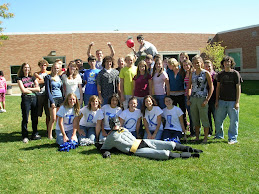
So I know both the TOK classes have watched or are in the middle of watching "The Usual Suspects". I've already seen it before and now that I'm watching it again I realize that some pieces of information that I took for being true turned out to be false. However, at the time I did not question the validity of the information.
In the movie, how do you know what you know and why do you accept it to be true?
Were there any points in the movie when you did question the validity of the information that was presented?
Please discuss but try not to give too much away for the people who haven't finished it yet. Thanks :)
Monday, May 26, 2008

Thursday, May 15, 2008
Again, freedom of choice is the right to hate
I found this a couple days ago and it reminded me of "Freedom of Choice is the Right to Hate".
What do you think of this?
-Its not necessary to watch the whole thing....yes it is from the tyra banks show-
What do you think of this?
-Its not necessary to watch the whole thing....yes it is from the tyra banks show-
Thursday, May 01, 2008
An Inconvenient Truth and WOKs
Al Gore's documentary An Inconvenient Truth is powerful in that it approaches the topic of global warming using all four ways of knowing. He appeals to sense perception by using graphs and charts, as well as graphical representations of the potential effects of global warming. He also incorporates humorous footage from The Simpsons, as well as his own personal connection to the issue to provoke an emotional response. He also defines his arguments in strictly logical terms, and uses empowering language to make people feel as though they can make a difference. What if a case was made against global warming using the same techniques?
Follow this link:
Daily Show Global Warming
and explore the justifications of this viewpoint from a TOK perspective.
Follow this link:
Daily Show Global Warming
and explore the justifications of this viewpoint from a TOK perspective.
Sunday, April 27, 2008
Presidential Race
Relating to the current focus in the media on the presidential race:
We’ve been hearing a lot in the news about the candidates, an important issue to be sure, as it will determine where our country will be headed in the next four years. But a trend has been emerging in the media coverage of this important race: the determined focus of coverage on “political gaffs” made by the candidates in their bid for nomination. For example, Hilary has been labeled a liar for saying she was “under sniper fire” in Bosnia. Obama has been called elitist by saying that people from Pennsylvania who were frustrated have been turning to “religion and guns”.
The most surprising thing about all this political hoopla is how many intelligent people I have heard justifying their positions on these candidates based upon these gaffs (versus the issues, as I expected).
So the question is: do these gaffs represent simple mistakes made during a stressful time by overtired candidates or are they signs of major character flaws? What WOKs do we use to justify our judgment of this? And how does the media coverage play into our perceptions of these gaffs (as it focuses on these versus the issues)?
We’ve been hearing a lot in the news about the candidates, an important issue to be sure, as it will determine where our country will be headed in the next four years. But a trend has been emerging in the media coverage of this important race: the determined focus of coverage on “political gaffs” made by the candidates in their bid for nomination. For example, Hilary has been labeled a liar for saying she was “under sniper fire” in Bosnia. Obama has been called elitist by saying that people from Pennsylvania who were frustrated have been turning to “religion and guns”.
The most surprising thing about all this political hoopla is how many intelligent people I have heard justifying their positions on these candidates based upon these gaffs (versus the issues, as I expected).
So the question is: do these gaffs represent simple mistakes made during a stressful time by overtired candidates or are they signs of major character flaws? What WOKs do we use to justify our judgment of this? And how does the media coverage play into our perceptions of these gaffs (as it focuses on these versus the issues)?
Monday, April 21, 2008
Community Service
Since all of us are in IB, there are definitely some points in the school year where we have had to do community service. In your opinion, do you feel that there is more need for service on a local, state, national, or global level? Justify your reasoning using WOKs and try to identify your own biases that might cause you to support one level over another.
Sunday, April 20, 2008
Everyone (Who Contributes) Gets a Cookie!
What’s your position on Eminent Domain? How would you define “Public Use”?
Remember: Anyone who contributes (With POK’s WOK’s etc.) to this post will get a cookie if they show up to the Eminent Domain IA presentation on May 14th.
Note: If you want more background information, or interesting stories, ask and I’ll post them to this thread.
Remember: Anyone who contributes (With POK’s WOK’s etc.) to this post will get a cookie if they show up to the Eminent Domain IA presentation on May 14th.
Note: If you want more background information, or interesting stories, ask and I’ll post them to this thread.
Wednesday, April 16, 2008
Ethics in Subliminal Messages?
To being with, we have had a bit of a dead spot in the blog, so I'll try to throw in a relatively controversial topic...
When my Norwegian relatives came over a few summers ago, my second cousin discussed subliminal messages. Since he was majoring in psycology, he talked on how most subliminal messages do not actually work, and it is actually better to just show a commercial about your given product.
However, this brings to light many ethical decisions.
Should subliminal messaging be allowed? Why or why not?
Try your best to use the POKs and WOKs for your justification
When my Norwegian relatives came over a few summers ago, my second cousin discussed subliminal messages. Since he was majoring in psycology, he talked on how most subliminal messages do not actually work, and it is actually better to just show a commercial about your given product.
However, this brings to light many ethical decisions.
Should subliminal messaging be allowed? Why or why not?
Try your best to use the POKs and WOKs for your justification
Monday, April 14, 2008
More Fiction
In class we came up with books that we felt we could know something from. I want to know if you've ever read a book of fiction that made you completely challenge something you knew before reading it. What ways of knowing were you using and what ways of knowing was the book using? What was the conclusion that you made after reading it? Oh, and just one more thing: do you think that the quality of the writing of a book can affect your ability to know from it?
Monday, April 07, 2008
Fiction
This week in TOK, we're looking at ways we can know through fiction by watching the movie "10 Things I Hate About You." Don't get me wrong, I like the movie, but what can we really say we know after watching it? Is it possible to know something through any type of fiction, or does knowing through fiction only come through certain works or genres? If so, what do you think those works or genres may be?
Discuss.
Discuss.
Sunday, April 06, 2008
An Echo
"An echo, while implying an enormity of a space, at the same time also defines it, limits it, and even temporarily inhabits it." -Mark Z. Danielewski
Reading this quote made me really think about ways of knowing outside of science. While an echo can be defined with sound waves and logical explanations, here is a definition that seems to be driven more by emotion and even sense perception. How can changing our usual ways of knowing help us gain a new perspective on something, such as the nature of an echo?
Reading this quote made me really think about ways of knowing outside of science. While an echo can be defined with sound waves and logical explanations, here is a definition that seems to be driven more by emotion and even sense perception. How can changing our usual ways of knowing help us gain a new perspective on something, such as the nature of an echo?
Wednesday, April 02, 2008
Culture.
How do you, personally, define American culture?
Is there a societal definition?
And how do we arrive at such a definition?
Is there a societal definition?
And how do we arrive at such a definition?
Monday, March 31, 2008
Olympic in China
This is an opinion article from the collegian, talking about how the olympics should not be hosted in Beijing.
Read this article, it is quiet entertaining.
Question: Do you agree with this article or not? Use the TOK terminology and understanding to support your claim.
(click on the topic title to read the article)
Read this article, it is quiet entertaining.
Question: Do you agree with this article or not? Use the TOK terminology and understanding to support your claim.
(click on the topic title to read the article)
Sunday, March 30, 2008
Universal Healthcare
So in the last week, one of the most interesting IA Presentations (in my opinion) was on universal healthcare in the United States. The group who presented were enthusiastic about their topic, and there wasn't much time for a full discussion. So, I figured it would be in order to continue the topic here. When speaking about the topic, it seems as if it is one that attracts fallacies more often than others. The ones I frequently note being "special pleading", "Two Wrongs Make a Right", and "Guilt By Association"- this last one applying to political figures and insurance companies. What are some of your thoughts on the issue?
Friday, March 14, 2008
Questions of chance or destiny...i guess
I'm an agnostic. I know this, and have been despite many peoples attempts to sway me one way or the other.
Recently however, there are some chances or coincidences..."luck" as many people say that are just so unlikely that I start to question that maybe there is a higher force looking out force us.
Any thoughts?
Recently however, there are some chances or coincidences..."luck" as many people say that are just so unlikely that I start to question that maybe there is a higher force looking out force us.
Any thoughts?
Friday, March 07, 2008
Universal Truth
Does universal truth exist? Or is truth based on the individual?
I'm sure we've all discussed this topic before, but now, as educated TOK students, I'm curious to know how everyone views this. With different truth tests and justifications, how do we know in which of these areas truth exists? Also, how have your opinions on this changed issue since taking TOK? Use examples!
I'm sure we've all discussed this topic before, but now, as educated TOK students, I'm curious to know how everyone views this. With different truth tests and justifications, how do we know in which of these areas truth exists? Also, how have your opinions on this changed issue since taking TOK? Use examples!
Wednesday, February 27, 2008
The Awakening
I was thinking about the movie we are watching in this class and it made me think about using inductive leaps to 'know' something. So my question is, are there any instances in which you used inductive leaps to know something like Dr. Sayer did in the movie? If so, did you later find out whether or not it was true based on legit ways of knowing?
Saturday, February 23, 2008
Creationism Has Been Proven
(Sorry to all of you viewing this as school because the videos won't work)
http://www.youtube.com/watch?v=9zwbhAXe5yk
http://www.youtube.com/watch?v=FZFG5PKw504
Based on the evidence given is this a PJTB? and if it is do you agree with it?
http://www.youtube.com/watch?v=9zwbhAXe5yk
http://www.youtube.com/watch?v=FZFG5PKw504
Based on the evidence given is this a PJTB? and if it is do you agree with it?
Friday, February 22, 2008
Documentary Film Partners and The Poughkeepsie Tapes
So, sometime this year (I believe) the Documentary Film Partners will be releasing tapings of a serial killer's stalkings and murders, known as The Poughkeepsie Tapes. It'll be the actual footage of how the he stalked and murdered his victims, shot by the killer himself. Click on the title for a link to the official page, where they have the trailer for the video.
This is the message given by the Documentary Film Partners:
"Documentary Film Partners is a new, independent filmmaking collective looking to develop and produce hard-hitting documentary programming with unflinching dedication to the facts.
The Collective, as we call it, is made up of both student and veteran filmmaking professionals who strive to teach and learn from one another while producing a style of filmmaking rare in today's festivals. This brand of collaboration is in the DNA of our company, and every film we develop and produce.
Our independent spirit drives us to tell stories that shock audiences out of their comfort-zones. This isn't your prime-time news magazine, expose fare, but rather a startling view of the world as it is. Sometimes, the world at its worst.
The DFP promise is to deliver audiences film experiences that change them forever. Films that awaken the mind, inspire the heart, and even anger the soul. No subject is off-limits, nothing is sacred. Documentary Film Partners is committed to this promise, and we believe it is our responsibility to produce films that achieve so much more than entertainment."
What's your reaction to this, based on a ToK standpoint?
Is releasing such material moral/ethical?
Is it a necessary part of knowledge?
What purpose does it actually serve?
(I don't care if you answer these questions; just comment in general...)
This is the message given by the Documentary Film Partners:
"Documentary Film Partners is a new, independent filmmaking collective looking to develop and produce hard-hitting documentary programming with unflinching dedication to the facts.
The Collective, as we call it, is made up of both student and veteran filmmaking professionals who strive to teach and learn from one another while producing a style of filmmaking rare in today's festivals. This brand of collaboration is in the DNA of our company, and every film we develop and produce.
Our independent spirit drives us to tell stories that shock audiences out of their comfort-zones. This isn't your prime-time news magazine, expose fare, but rather a startling view of the world as it is. Sometimes, the world at its worst.
The DFP promise is to deliver audiences film experiences that change them forever. Films that awaken the mind, inspire the heart, and even anger the soul. No subject is off-limits, nothing is sacred. Documentary Film Partners is committed to this promise, and we believe it is our responsibility to produce films that achieve so much more than entertainment."
What's your reaction to this, based on a ToK standpoint?
Is releasing such material moral/ethical?
Is it a necessary part of knowledge?
What purpose does it actually serve?
(I don't care if you answer these questions; just comment in general...)
Tuesday, February 19, 2008
Maybe its just one of those days...
We have already done this in class, but I was just thinking aobut it since I started crying after watching the Pedigree commercial (link)
Why do humans respond more emotionally when the animal dies (I am Legend, Volvo ads (the foreshadowing), etc.) than when humans die?*
*I know humans are technically animals. But I'm using the very generic separation term
Why do humans respond more emotionally when the animal dies (I am Legend, Volvo ads (the foreshadowing), etc.) than when humans die?*
*I know humans are technically animals. But I'm using the very generic separation term
Wednesday, February 13, 2008
Some thoughts on emotion and who we are
1) In class we discussed whether it was possible to know solely through emotion. We came to the conclusion that no, one cant because emotions are responses to sensory stimuli.
If this is so, how can we as mankind reconcile the fact that no two people experience certain stimuli (qualia) the same way? How can everyone agree as to exactly what a headache feels like, what colors are, or what being in love feels like?
2) Jung suggests "personalities are shaped by feelings and thoughts while sensations color the deetails and inutition interprets the currents".
Is this true? What exactly are personalities? Are they our personal interpretations of a person? Or their expression of themselves as they see? Or something else entirely?
If this is so, how can we as mankind reconcile the fact that no two people experience certain stimuli (qualia) the same way? How can everyone agree as to exactly what a headache feels like, what colors are, or what being in love feels like?
2) Jung suggests "personalities are shaped by feelings and thoughts while sensations color the deetails and inutition interprets the currents".
Is this true? What exactly are personalities? Are they our personal interpretations of a person? Or their expression of themselves as they see? Or something else entirely?
Love
So since it is the week of Valentines Day I figured that a love question would be appropriate. So using the WOKs explain how someone can know that they are in love. (5th hour discussed this in class in reference to the Love is a Fallacy article that we read, this can be a continuation of that discussion.) Also what role does the media play in people’s view of love?
Wednesday, February 06, 2008
The Giraffe Test
Check out the Link above...
Try "The Giraffe Test".
What does this say about you as a thinker/knower?
Try "The Giraffe Test".
What does this say about you as a thinker/knower?
Weblog Mania
So (contrary to popular belief) I was not slacking off today but at a business competition, FBLA. While my partner and I were competing, we overheard that our speaking prompt might be about whether or not it is ethical for employers to look at the myspace or facebook profiles of any current or future employees to determine their position in the workspace. It turns out that the other team was trying to trick us into thinking that was the prompt and it actually wasn't. But that's okay.
I thought the problem was much more interesting than the inappropriate-relationships-at-work problem we thought and I would like to pose it to you guys.
Do you think looking at these profiles should factor into the judgment of possible employees in determining their effectiveness? For example, a person that is portrayed as a very social and unfocused individual on a myspace page versus a person with the exact same resume but no online profile are weighed and the one without a myspace gets the job. Do you think this is fair?
We came up with the solution that in order to ensure equal opportunity, an applicant should be informed that all public records concerning him or her would be looked at, just like they are required to talk about past convictions on an application. This would allow the applicants to have more equal chances in applying.
Please use personal examples and logic to justify. For example, I know that at Poudre a while ago there was some sort of situation with a teacher or coach looking at myspace accounts.
I thought the problem was much more interesting than the inappropriate-relationships-at-work problem we thought and I would like to pose it to you guys.
Do you think looking at these profiles should factor into the judgment of possible employees in determining their effectiveness? For example, a person that is portrayed as a very social and unfocused individual on a myspace page versus a person with the exact same resume but no online profile are weighed and the one without a myspace gets the job. Do you think this is fair?
We came up with the solution that in order to ensure equal opportunity, an applicant should be informed that all public records concerning him or her would be looked at, just like they are required to talk about past convictions on an application. This would allow the applicants to have more equal chances in applying.
Please use personal examples and logic to justify. For example, I know that at Poudre a while ago there was some sort of situation with a teacher or coach looking at myspace accounts.
Monday, February 04, 2008
Getting Duped
I was reading one of my favorite magazines today-Scientific American Mind-and there was an article on fallacies in the media with special relation to politics. I thought it was very applicable to TOK right now. Click the link above to read the article.
What can you do to keep yourself from "Getting Duped" by the media?
If you have a complete understanding of fallacies does that mean that you will not be able to be swayed by the media?
-Graham P
Political affiliations
Yes, I know that many of you are getting sick of hearing about politics eventhough many of us will be able to vote in the upcoming election. For that, I'm sorry
However, I'm interested in how many of you know who you support and whether it's because you agree with their views or just their general image/message.
The link provided is a test that shows who you mostly likely align with as far as ideology; for how many of you does it match up? (I'm not sure how accurate it is...but it was the best I could find).
Now, why do some people defend a candidate just because they are of the same party? Has politics become so Democrat vs. Republican that many people cant see beyond the party and into what a cadidate stands for? How many people would vote for someone merely because they are in that party, without stopping to consider their view beyond that it "should fit because thats what the party always represents"?
However, I'm interested in how many of you know who you support and whether it's because you agree with their views or just their general image/message.
The link provided is a test that shows who you mostly likely align with as far as ideology; for how many of you does it match up? (I'm not sure how accurate it is...but it was the best I could find).
Now, why do some people defend a candidate just because they are of the same party? Has politics become so Democrat vs. Republican that many people cant see beyond the party and into what a cadidate stands for? How many people would vote for someone merely because they are in that party, without stopping to consider their view beyond that it "should fit because thats what the party always represents"?
Sunday, February 03, 2008
Fallacious Speakers
I recently got into a political debate amongst a group of people at school and I found that as we each defended our presidential candidate/political parties we started using more and more fallacies in our arguments, except you could tell how invalid we sounded which led to the end of our debate. What I am wondering is: What differentiates the fallacies used by professionals (ex: politician's speeches) and those used everyday (ex: my debate)? Is there a difference? Which one makes it easier to believe the fallacies as truth?
"Money is the root of all evil"
Sorry, it’ll be long. This is an excerpt from Atlas Shrugged by Ayn Rand, though I’m editing the middle out because otherwise it’d be longer and I really wanted the beginning and end.
“So you think that money is the root of all evil? Have you ever asked what is the root of money? Money is a tool of exchange, which can’t exist unless there are goods produced and men able to produce them. Money is the material shape of the principle that men who wish to deal with one another must deal by trade and give value for value. Money is not the tool of the moochers, who claim your product by tears, or of the looters, who take it from you by force. Money is made possible only by the men who produce. Is this what you consider evil?
…
If you ask me the proudest distinction of Americans, I would choose- because it contains all the others- the fact that they were the people who created the phrase ‘to make money.’ No other language or nation had ever used these words before; men had always thought of wealth as a static quantity- to be seized, begged, inherited, shared, looted or obtained as a favor. Americans were the first to understand that wealth has to be created. The words ‘to make money’ hold the essence of human morality.
Yet these were the words for which Americans were denounced by the rotted cultures of the looters’ continents. Now the looters’ credo has brought you to regard your proudest achievements as a hallmark of shame, your prosperity as guilt, your greatest men, the industrialists, as blackguards, and your magnificent factories as the product and property of muscular labor, the labor of whip-driven slaves, like the pyramids of Egypt. The rotter who simpers that he sees no difference between the power of the dollar and the power of the whip, ought to learn the difference on his own hide-as, I think, he will.
Until and unless you discover that money is the root of all good, you ask for your own destruction. When money ceases to be the tool by which men deal with one another, then men become the tools of men. Blood, whips and guns- or dollars. Take your choice- there is no other- and your time is running out.”
My question to you guys is; what do you think? Is money the root of all evil? Is it the root of all good? Or neither? And, of course, please justify.
Sunday, January 27, 2008
Empire
I just finished a new book, Empire, by Orson Scott Card. For those of you who are not familiar with him; Card is mainly science fiction author; his most famous works are the Ender's Game series. This new book is different from most of his others books as it is set in the
In the novel the media is shown not as a reporter of the news but rather as a manipulator of the news. Characters in the novel are careful to choose their language so it will be "spun" the way they intend for the news. How does the Media manipulate what we think about world events? Does it matter to us what news outlet reports the news to you, Fox News or CNN? How can language an interviewee uses be turned to show whatever the interviewer wants, or fits with his/her ideology. Lastly, ethically/morally or on whatever scale you choose: should journalists try to avoid editorializing in their news pieces and attempt to remain objective, or should they present the events through the lens of their Ideology?
(I apologize for the long ramble but I found the book very thought provoking on this issue and others)
Thursday, January 24, 2008
Perception.
Anecdote:
So, I was trying to write my second english EA and thinking about finishing my biology lab at the same time, and I got side-tracked into thinking about how everyone's perception of the world differs. And I asked myself a question that I couldn't find an answer to, so I posted it in a note for some of my friends to answer, and Madi suggested I post it on here. Thus, the following is the question I've been pondering, and I'd like some answers to it:
If you could comprehend the world through someone else's perception (Just for a day or so), getting all of their recognized and unrecognized bias and history and everything, whose perception would you want to "see" the world through? And why?
So, I was trying to write my second english EA and thinking about finishing my biology lab at the same time, and I got side-tracked into thinking about how everyone's perception of the world differs. And I asked myself a question that I couldn't find an answer to, so I posted it in a note for some of my friends to answer, and Madi suggested I post it on here. Thus, the following is the question I've been pondering, and I'd like some answers to it:
If you could comprehend the world through someone else's perception (Just for a day or so), getting all of their recognized and unrecognized bias and history and everything, whose perception would you want to "see" the world through? And why?
Racism: When do we realize it?
So in IB History of the Americas class today, we watched a video that informed us about the rise and fall of "Jim Crow" laws, which are now recognized as greatly immoral and racist. In the video, there were many video clips of early 20th century movies such as The Birth of a Nation that depicted African-Americans are ignorant, stupid, and cowardly. However, those types of movies were recognized as racist and immoral in the 1960s, around the Civil Rights Movement.
So my question for you is, at what point in time, socially and politically, do we recognize racism in an aspect of our society that was once widely accepted as moral? Why did it take so long for the American public to realize that those types of movies were racist and immoral?
So my question for you is, at what point in time, socially and politically, do we recognize racism in an aspect of our society that was once widely accepted as moral? Why did it take so long for the American public to realize that those types of movies were racist and immoral?
Pay it Forward
So, I read the book Pay it Forward and just completely lost it at the end. But then I had me thinking that, can something like his project actually work? Because it would seem like it would work for the first few couple of people, then it would just die down. Which would be a shame, because if it actually did work, then I think that the world would be a better place. So, what do you think? If someone in today's society were to start a project described in Pay it Forward
Tuesday, January 15, 2008
The Elections
Well now that primaries are in action a question as come up. Does the two political parties of rep. and dem. hinder the choice that the voter chooses, and if so is it an unknown bias? And what determines a voter to choose somehting that involves an issue, is it the commericals, is it the piont of view of their parents, or is it persuaded by their friends?
Sunday, January 13, 2008
Suicide and the Macabre
I was listening to a song from the musical Spring Awakening, and I realized that the song precedes a suicide. I began to wonder why our society is so focused on depressing and painful issues. How does society use ideas such as suicide to justify knowledge about life, and how does being exposed to these issues change the way we perceive life and death?
The Golden Rule - Realistic?
Since I was a little kid, I've had the Golden Rule shoved down my throat. Not that I have anything against it, but does it actually work? If it's supposed to apply to everyone, then shouldn't we treat others how they treat us? After all, thats how they want to be treated, right? Isn't the old edict "an eye for an eye" more appropriate?
An Ethical Situation Close to Home
Recently in my travels around Poudre High School, a problematic ethical situation presented itself to me. I was on the way up the stairs from my second period Spanish class to my forth period chemistry class and I was running a little late because by the time I reached the top of the stairs the minute bell had already rang. In front of me was the usual chaotic jumble in the four way intersection at the top of the stairs by the business department. I also really did not want to be late to chemistry because I did not have a pass and I had already been late the previous day.
I therefore had to make the choice of either pushing my way through the mess without consideration of the other people I may be affecting and getting to class on time or politely wading my way through the sea of people as I usually do and in all likelihood arriving to class late.
What should I have done and with what ethical justification/s should I have done it?
Also what parallels do you see with this situation and larger picture world situations (for example world politics or war) and do the same ethical justifications for my situation take effect for the larger one?
I therefore had to make the choice of either pushing my way through the mess without consideration of the other people I may be affecting and getting to class on time or politely wading my way through the sea of people as I usually do and in all likelihood arriving to class late.
What should I have done and with what ethical justification/s should I have done it?
Also what parallels do you see with this situation and larger picture world situations (for example world politics or war) and do the same ethical justifications for my situation take effect for the larger one?
Films, Fame and Suicide
I recently saw the movie "Control" at the Lyric. "Control" is a biopic of Ian Curtis, who was the lead singer and lyricist of the British band Joy Division. Ian only lived for 23 years, he committed suicide on May 18th, 1980. Check Wikipedia for a more complete biography or YouTube for some original Joy Division music videos (you've all heard their song "Love Will Tear Us Apart", you just don't know it). The film was very good, it was honored recently at the Cannes Film Festival and won several major acting awards in the
Wednesday, January 09, 2008
Slang
In class, we're currently trying our best to incorporate old slangs of the 20s to the 80s into our little skits.
So I was wondering--
During our little research of slangs, I realized that we still use a lot of phrases from 20, 80 years ago. For example, the word "crush" (as in I have a crush on someone) was around ever since the 1920s. We discussed this in class a little bit, but what is it about some slangs that are still relevant today? What are some new slangs of our generation, and which of those do you think will last and still be used by the upcoming generations? Please justify your answer.
Jeewon K.
So I was wondering--
During our little research of slangs, I realized that we still use a lot of phrases from 20, 80 years ago. For example, the word "crush" (as in I have a crush on someone) was around ever since the 1920s. We discussed this in class a little bit, but what is it about some slangs that are still relevant today? What are some new slangs of our generation, and which of those do you think will last and still be used by the upcoming generations? Please justify your answer.
Jeewon K.
Wordwiv. What's happening to our language?
So on Monday the 3rd hour class talked about some common English slang terms that came to mind and about the definition of the term slang. As a class we came up with several common themes, among them being that slang terms are society’s response to objects or ideas that need to be put in terms of language, a lingual commonality used within certain communities, and that it is a product of pop culture used to show common knowledge of current events.
All of these definitions have merit, but I was curious to see what people outside of our IB community had to say on the subject. In order to find out I went to one of the places where pop culture, one of the sources that we named as an influence in the development of slang, is compiled from all over the world: youtube.com. What I found is that there are many socially conscious people who are eager to lend a hand to those of us who are uneducated in the language of slang, but even though I picked up some handy new phrases, some of the information in those videos was a little sketch (probably put there by a robocracy), ya know what I’m sayin’ homeslick?
After that experience I went to urbandictionary.com, which describes itself as “a slang dictionary with your definitions” to find out their definition for the word. Like wikipedia.com the information on the website is completely supplied by regular people, but after all I was looking for other people’s definition of “slang”, so it was exactly the type of source I was looking for. Of the two most common definitions (one not having anything to do with language) I found this applicable meaning:
“slang is the continual and ever-changing use and definition of words in informal conversation, often using references as a means of comparison or showing likeness. some modern slang has endured over the decades since its inception (i.e. cool) and some will only last a few years before being rendered obsolete or outdated (i.e. bling bling). slang can be born from any number of situations or ideas, and can be blunt or riddled with metaphor, and often quite profound. the use of slang is frequently ridiculed by culturally-ignorant people who feel it is the product of insufficient education and believe it to be counter-evolutionary; of course, they couldn't be farther from the truth. human language has been in a state of constant reinvention for centuries, and slang has been used and created by poets and writers of all sorts (William Shakespeare has been credited for the upbringing of at least a couple of words). it is the right and responsibility of the modern human to keep re-evaluating language, to give dead words innovative contemporary meanings or to simply invent new ones, in order to be more appealing and representative to the speaker/listener (which was essentially the basis behind language anyway, to understandably communicate thoughts or ideas verbally).”
-http://www.urbandictionary.com/define.php?term=slang
So my question to all of you is do you agree with this definition that we have a responsibility to revaluate/reinvent language? What purpose does the creation of a new word serve if it will only disappear in a few years, months, weeks?
So don’t be a dandruff, and answer my post!! m’kay.
All of these definitions have merit, but I was curious to see what people outside of our IB community had to say on the subject. In order to find out I went to one of the places where pop culture, one of the sources that we named as an influence in the development of slang, is compiled from all over the world: youtube.com. What I found is that there are many socially conscious people who are eager to lend a hand to those of us who are uneducated in the language of slang, but even though I picked up some handy new phrases, some of the information in those videos was a little sketch (probably put there by a robocracy), ya know what I’m sayin’ homeslick?
After that experience I went to urbandictionary.com, which describes itself as “a slang dictionary with your definitions” to find out their definition for the word. Like wikipedia.com the information on the website is completely supplied by regular people, but after all I was looking for other people’s definition of “slang”, so it was exactly the type of source I was looking for. Of the two most common definitions (one not having anything to do with language) I found this applicable meaning:
“slang is the continual and ever-changing use and definition of words in informal conversation, often using references as a means of comparison or showing likeness. some modern slang has endured over the decades since its inception (i.e. cool) and some will only last a few years before being rendered obsolete or outdated (i.e. bling bling). slang can be born from any number of situations or ideas, and can be blunt or riddled with metaphor, and often quite profound. the use of slang is frequently ridiculed by culturally-ignorant people who feel it is the product of insufficient education and believe it to be counter-evolutionary; of course, they couldn't be farther from the truth. human language has been in a state of constant reinvention for centuries, and slang has been used and created by poets and writers of all sorts (William Shakespeare has been credited for the upbringing of at least a couple of words). it is the right and responsibility of the modern human to keep re-evaluating language, to give dead words innovative contemporary meanings or to simply invent new ones, in order to be more appealing and representative to the speaker/listener (which was essentially the basis behind language anyway, to understandably communicate thoughts or ideas verbally).”
-http://www.urbandictionary.com/define.php?term=slang
So my question to all of you is do you agree with this definition that we have a responsibility to revaluate/reinvent language? What purpose does the creation of a new word serve if it will only disappear in a few years, months, weeks?
So don’t be a dandruff, and answer my post!! m’kay.
Education
"
If a man have a stubborn and rebellious son, which will not obey the voice of his father, or the voice of his mother, and that, when they have chastened him, will not hearken unto them:
Then shall his father and his mother lay hold on him, and bring him out unto the elders of his city, and unto the gate of his place;
And they shall say unto the elders of his city, This our son is stubborn and rebellious, he will not obey our voice; he is a glutton, and a drunkard.
And all the men of his city shall stone him with stones, that he die: so shalt thou put evil away from among you; and all Israel shall hear, and fear.
—Deuteronomy 21:18-21, KJV
But as we have seen, the repressive structure of the segregated classroom [Julia’s note: age segregation, not race segregation] itself guarantees that any natural interest in learning will finally serve the essentially disciplinary interests of the school…. If they [idealistic young teachers] had forgotten what a jail school was for them, it all comes back now. And they are soon forced to see that though there are liberal jails and not-so-liberal jails, by definition they are jails….
Children, then, are not freer than adults. They are burdened by a wish fantasy in direct proportion to the restraints of their narrow lives; with an unpleasant sense of their own physical inadequacy and ridiculousness; with constant shame about their dependence, economic and otherwise (”Mother, may I?”); and humiliation concerning their natural ignorance of practical affairs. Children are repressed at every waking minute. Childhood is hell.
—Shulamith Firestone, The Dialectic of Sex
Public education, in its present form, is oppressive of children. This is to be expected; when the entire society is oppressive of children, why should the educational system be any different? Public schools are grounded in ageist assumptions about the nature of children and the proper relationship between adults and children in society. Among these assumptions:
1. Adults deserve respect by virtue of their age alone.
People deserve respect because of their knowledge and wisdom and ability. These attributes may be correlated with age, but that correlation is at least in part a result of the deliberate, institutionalized benighting of minors. Despite this oppression, there are children who manage to exceed adults in knowledge, wisdom, and ability in certain subjects; in public schools, these children must feign respect for their teachers or be considered delinquent. Teachers feel entitled to this respect and feel entitled to enforce it; hell, the whole society affirms their automatic superiority over children, so the origin of their entitlement is no mystery.
2. Children need education for X number of years (X a positive integer whose exact value varies from state to state) before they can be allowed into society.
I have never liked mandatory education laws. Who is the state to dictate how long children must remain economically dependent and helpless? Who is the state to dictate the pace of each child’s learning? Firestone argues—correctly, I think—that the “myth of childhood” oppresses children under the guise of offering protection; the economic dependence caused by mandatory education laws goes far beyond the scope of children’s biological dependence.
3. Children should be segregated from people who are not their age.
Two implications are present here: first, that there is a gulf between children and adults because the natures of the two classes are so fundamentally different; second, that age indicates ability. From the first, we can explain the existence of an educational institution that isolates children from egalitarian relations with adults. From the second, we can explain why administrators are so reluctant to destroy the Herculean obstacle course that faces students who try to skip multiple grades. Implicit in the organization of public schools is an essentialism—age essentialism, we can call it—that holds children of different ages to be intrinsically different from one another and children of the same age to be uniform in their social and intellectual development. The opposition to gifted education, therefore, can be interpreted not only in terms of our society’s anti-intellectualism, which is undeniable, but also in terms of our society’s commitment to the oppression of children.
4. Children need to be disciplined when they defy authority; schools should put children in their place.
Wherever an oppressor/oppressed dynamic exists, there is the threat of rebellion. The public school system reduces this threat through a combination of indoctrination and fear. The obsession with order, control, and uniformity, so prevalent in public schools, is at odds with a worldview that treats children as human, for no human could be so restricted in eating, drinking, peeing, asking questions, talking, sitting down, standing up, or moving.
The natural solution is homeschooling, but this poses a problem for feminists. In the present patriarchy, it is reasonable to assume that the burden of homeschooling will fall on females. It is also reasonable to assume that homeschooling will reinforce the nuclear family and propagate ignorance. In these respects, it appears that insofar as widespread homeschooling would alleviate the oppression of children, it would also exacerbate patriarchal ideals about women’s domesticity. Is public schooling the least of many evils in an unenlightened society?
"
If a man have a stubborn and rebellious son, which will not obey the voice of his father, or the voice of his mother, and that, when they have chastened him, will not hearken unto them:
Then shall his father and his mother lay hold on him, and bring him out unto the elders of his city, and unto the gate of his place;
And they shall say unto the elders of his city, This our son is stubborn and rebellious, he will not obey our voice; he is a glutton, and a drunkard.
And all the men of his city shall stone him with stones, that he die: so shalt thou put evil away from among you; and all Israel shall hear, and fear.
—Deuteronomy 21:18-21, KJV
But as we have seen, the repressive structure of the segregated classroom [Julia’s note: age segregation, not race segregation] itself guarantees that any natural interest in learning will finally serve the essentially disciplinary interests of the school…. If they [idealistic young teachers] had forgotten what a jail school was for them, it all comes back now. And they are soon forced to see that though there are liberal jails and not-so-liberal jails, by definition they are jails….
Children, then, are not freer than adults. They are burdened by a wish fantasy in direct proportion to the restraints of their narrow lives; with an unpleasant sense of their own physical inadequacy and ridiculousness; with constant shame about their dependence, economic and otherwise (”Mother, may I?”); and humiliation concerning their natural ignorance of practical affairs. Children are repressed at every waking minute. Childhood is hell.
—Shulamith Firestone, The Dialectic of Sex
Public education, in its present form, is oppressive of children. This is to be expected; when the entire society is oppressive of children, why should the educational system be any different? Public schools are grounded in ageist assumptions about the nature of children and the proper relationship between adults and children in society. Among these assumptions:
1. Adults deserve respect by virtue of their age alone.
People deserve respect because of their knowledge and wisdom and ability. These attributes may be correlated with age, but that correlation is at least in part a result of the deliberate, institutionalized benighting of minors. Despite this oppression, there are children who manage to exceed adults in knowledge, wisdom, and ability in certain subjects; in public schools, these children must feign respect for their teachers or be considered delinquent. Teachers feel entitled to this respect and feel entitled to enforce it; hell, the whole society affirms their automatic superiority over children, so the origin of their entitlement is no mystery.
2. Children need education for X number of years (X a positive integer whose exact value varies from state to state) before they can be allowed into society.
I have never liked mandatory education laws. Who is the state to dictate how long children must remain economically dependent and helpless? Who is the state to dictate the pace of each child’s learning? Firestone argues—correctly, I think—that the “myth of childhood” oppresses children under the guise of offering protection; the economic dependence caused by mandatory education laws goes far beyond the scope of children’s biological dependence.
3. Children should be segregated from people who are not their age.
Two implications are present here: first, that there is a gulf between children and adults because the natures of the two classes are so fundamentally different; second, that age indicates ability. From the first, we can explain the existence of an educational institution that isolates children from egalitarian relations with adults. From the second, we can explain why administrators are so reluctant to destroy the Herculean obstacle course that faces students who try to skip multiple grades. Implicit in the organization of public schools is an essentialism—age essentialism, we can call it—that holds children of different ages to be intrinsically different from one another and children of the same age to be uniform in their social and intellectual development. The opposition to gifted education, therefore, can be interpreted not only in terms of our society’s anti-intellectualism, which is undeniable, but also in terms of our society’s commitment to the oppression of children.
4. Children need to be disciplined when they defy authority; schools should put children in their place.
Wherever an oppressor/oppressed dynamic exists, there is the threat of rebellion. The public school system reduces this threat through a combination of indoctrination and fear. The obsession with order, control, and uniformity, so prevalent in public schools, is at odds with a worldview that treats children as human, for no human could be so restricted in eating, drinking, peeing, asking questions, talking, sitting down, standing up, or moving.
The natural solution is homeschooling, but this poses a problem for feminists. In the present patriarchy, it is reasonable to assume that the burden of homeschooling will fall on females. It is also reasonable to assume that homeschooling will reinforce the nuclear family and propagate ignorance. In these respects, it appears that insofar as widespread homeschooling would alleviate the oppression of children, it would also exacerbate patriarchal ideals about women’s domesticity. Is public schooling the least of many evils in an unenlightened society?
"
Tuesday, January 08, 2008
Except For In This Case
Well, I'm hosting the blog this week, so here's my question for all of you.
Whenever one makes an argument, people will try to poke holes in it by asking "Well, what if happened, would you still believe that?". Many times, this leads to making exceptions to our arguments. Here's my question: Does making an exception to an argument weaken the argument? Or can it strengthen it?
Hope everyone had a restful and fun break.
Rick Andrews
Whenever one makes an argument, people will try to poke holes in it by asking "Well, what if
Hope everyone had a restful and fun break.
Rick Andrews
Monday, January 07, 2008
Culture and Slang
During class today we had many references to slang that was from another culture. There was talk about being included or excluded due to different slang. Some may argue that this is not in fact slang at all. The question that I have to pose is:
-Graham P
An Ethical Dilemma
A few weeks before break, my biology class was shown a documentary starring Francis Crick (of Watson and Crick, the duo that proposed the most plausible DNA structure so far), featuring his views on the use of genetic screening, genetic engineering, and so forth. One of Crick's responses, which sums up his stance, was "If we don't play God, who will?" Although I see some knowledge issues in this statement with regard to religion, I couldn't stop thinking about the sentiment. I myself am a subscriber to the natural selection theory, but I wonder, how much are humans a product of their environment anymore? Of course we haven't managed to escape the loop thus far, but scientific advances, specifically in genetics, has made it and issue of increasing importance. Is it ethical to intervene with the delicate design that is DNA when we have no way of knowing the long term repercussions of such actions? At the same time, are the short term benefits of genetic powerhouse crops, and even genetically strong people, more important than potential issues that may or may not occur in the future? Or are we so far into designing our environment to suit us that the time for making decisions is past? Part of what makes this debate a difficult one is the emotionally loaded language that is used to fight it, since quality of life is at stake either way. Nevertheless, I am interested in what you all think, as this is a dilemma that has stumped me for quite a while.
"You dig it?"
How does slang hinder and help out communication? What about on an international/regional/generational level? What does slang bring to a language? Is it more of a hinderance or a help?
Sunday, January 06, 2008
Language
I got this idea, if we only had a sign language and no other form of commmunication how would it affect how we obtain knowledge? Would it hinder the meaning behind it such as you couldn't give any verbal importance to the converstation, or how you would always have to give eye contain to the speaker to understand what they are saying. Would it also depend on what type of learner you are? Like for expample I'm a visual learner so therefore I learn not for speech. Would audio learns be affected if our society was based off of that type of language. I got my idea from The Clan of Cave Bear by Jean M. Auel.
Sunday, December 23, 2007
Become and Organ Donor!
Sparked by a new book-
Is organ donation ethical/moral?
-Consider the link, but also, is it ethical and/or moral to move someone up the list based on societal status or profession, or celebrity status?
- What about using organs from accident victims, or from those in a brain dead state or persistent coma?
-There is also an issue of organ theft (i only bring this up because I'm in New Orleans right now, and its becoming a major problem); someone is sedated/kidnapped and an organ removal is performed without consent usually without a sterile environment. Any thoughts on this?
Is organ donation ethical/moral?
-Consider the link, but also, is it ethical and/or moral to move someone up the list based on societal status or profession, or celebrity status?
- What about using organs from accident victims, or from those in a brain dead state or persistent coma?
-There is also an issue of organ theft (i only bring this up because I'm in New Orleans right now, and its becoming a major problem); someone is sedated/kidnapped and an organ removal is performed without consent usually without a sterile environment. Any thoughts on this?
Sunday, December 16, 2007
Dow Chemical Company
While writing my journal on the uses of language and its ability to illuminate or obscure meaning, I recalled a Dow Chemical Company commercial I saw this summer. Observe the use of sight and sound perception, as well as the language they use. Please click the link below before continuing to read this post.
So, in response to what they saw as utter hypocrisy on Dow's part, www.thetruthaboutdow.org put out their own commercial and posted on YouTube:
http://www.youtube.com/watch?v=lbpuSPL-FNU&NR=1
Just thought I'd share an interesting example of the power of language in conjunction with sense perception.
http://www.youtube.com/watch?v=3ylKTkp9to0
So, in response to what they saw as utter hypocrisy on Dow's part, www.thetruthaboutdow.org put out their own commercial and posted on YouTube:
http://www.youtube.com/watch?v=lbpuSPL-FNU&NR=1
Just thought I'd share an interesting example of the power of language in conjunction with sense perception.
Thursday, December 13, 2007
Orders
So I was recently had interviews with representatives of our Senators and Congresswoman. They were interviewing me to decide whether I deserved a nomination to a Service Academy. During those interviews I was asked a very interesting question.
The question was what would you do if you were given a direct order from a commanding officer to do something that was against your morals. I wanted to take it even further and ask, what if it was against ethical standards. Is there a difference? And if so, why?
I know many of you will not have to deal with a 'commanding officer' but just think of it as a boss, somebody who can control parts of your life.
Glenn
The question was what would you do if you were given a direct order from a commanding officer to do something that was against your morals. I wanted to take it even further and ask, what if it was against ethical standards. Is there a difference? And if so, why?
I know many of you will not have to deal with a 'commanding officer' but just think of it as a boss, somebody who can control parts of your life.
Glenn
Tuesday, December 11, 2007
Abortion
A topic of great controversy is the pro-life / pro-choice argument. So many factors play into this. At what point is a fetus considered alive? Is the act of abortion similar to the act of murder? Should the woman have the choice? How can it be fair for a raped woman to have to carry the child of her assailant? What if the mother's own life is in danger? I found support for either the pro-life or the pro-choice argument.
Pro-Life: (View each of the photos and take in mind the effect of the captions. Be warned, website contains very disturbing images.) http://www.jonsplace.org/rel/abortionpics.htm
Pro Choice:
Premise One: Individuals own their bodies, and everything that is growing within them.
Premise Two: Fetuses grow within the bodies of their mothers.
Conclusion One: Females own their fetuses.
Premise Three: Individuals may destroy that which they own.
Premise Four: Females own their fetuses.
Conclusion Two: Females may destroy their fetuses.
(For further discussion of these premises, follow this link:
http://killtheafterlife.blogspot.com/2006/03/magnificent-pro-choice-argument.html)
After reviewing the two sections, what do you think? Present your own view on abortion and discuss how the images and premises fairly or unfairly influenced your opinion or could influence the opinion of others.
Pro-Life: (View each of the photos and take in mind the effect of the captions. Be warned, website contains very disturbing images.) http://www.jonsplace.org/rel/abortionpics.htm
Pro Choice:
Premise One: Individuals own their bodies, and everything that is growing within them.
Premise Two: Fetuses grow within the bodies of their mothers.
Conclusion One: Females own their fetuses.
Premise Three: Individuals may destroy that which they own.
Premise Four: Females own their fetuses.
Conclusion Two: Females may destroy their fetuses.
(For further discussion of these premises, follow this link:
http://killtheafterlife.blogspot.com/2006/03/magnificent-pro-choice-argument.html)
After reviewing the two sections, what do you think? Present your own view on abortion and discuss how the images and premises fairly or unfairly influenced your opinion or could influence the opinion of others.
Monday, December 10, 2007
a way to stop paralysis?
Recently, a professional football player was injured in a helmet to helmet collision. At the field, doctors pronounced him paralyzed for the rest of his life, the player was promptly air-lifted to a hospital where doctors experimentally injected his body with cold saline and lowered his body temperature enough to stop the swelling in the spinal column. As a result of this the player is now up and walking with limited body functions.
Is it ethical to step in and save this professional football player from paralysis when so many others become paralyzed each year simply because they can't afford this cutting edge science?
In what ways will this be a good step for medicine? Will it have a bad impact at all? Discuss.
Here is a link if you want the whole story:
http://www.canada.com/globaltv/national/story.html?id=8fa1c3b6-916a-45ed-b2bd-a119e51ebf53
Is it ethical to step in and save this professional football player from paralysis when so many others become paralyzed each year simply because they can't afford this cutting edge science?
In what ways will this be a good step for medicine? Will it have a bad impact at all? Discuss.
Here is a link if you want the whole story:
http://www.canada.com/globaltv/national/story.html?id=8fa1c3b6-916a-45ed-b2bd-a119e51ebf53
Draft? or All Volunteer Military?
There are those who volunteer to enlist because it is their choice and they feel that it is their duty to do so, but is it fair to have the all volunteer military when many of the people who enlist are the ones who have no other options? Is it ethical for people like Bush and Cheney who make the decisions, to send these people to war when they have never gone to war themselves and will never have to worry about sending their children? The draft no longer exists for the very reason that people don't want to be forced to go to war, especially those who don't agree with it and feel that it is not a sacrifice they should be making. But if we were to have the draft system instead, there probably would be a lot more protest and people who can so easily ignor the war now would definitely be forced to face this issue. So which would you choose? The draft system or all volunteer military?
There are those who volunteer to enlist because it is their choice and they feel that it is their duty to do so, but is it fair to have the all volunteer military when many of the people who enlist are the ones who have no other options? Is it ethical for people like Bush and Cheney who make the decisions, to send these people to war when they have never gone to war themselves and will never have to worry about sending their children? The draft no longer exists for the very reason that people don't want to be forced to go to war, especially those who don't agree with it and feel that it is not a sacrifice they should be making. But if we were to have the draft system instead, there probably would be a lot more protest and people who can so easily ignor the war now would definitely be forced to face this issue. So which would you choose? The draft system or all volunteer military?
Subscribe to:
Posts (Atom)